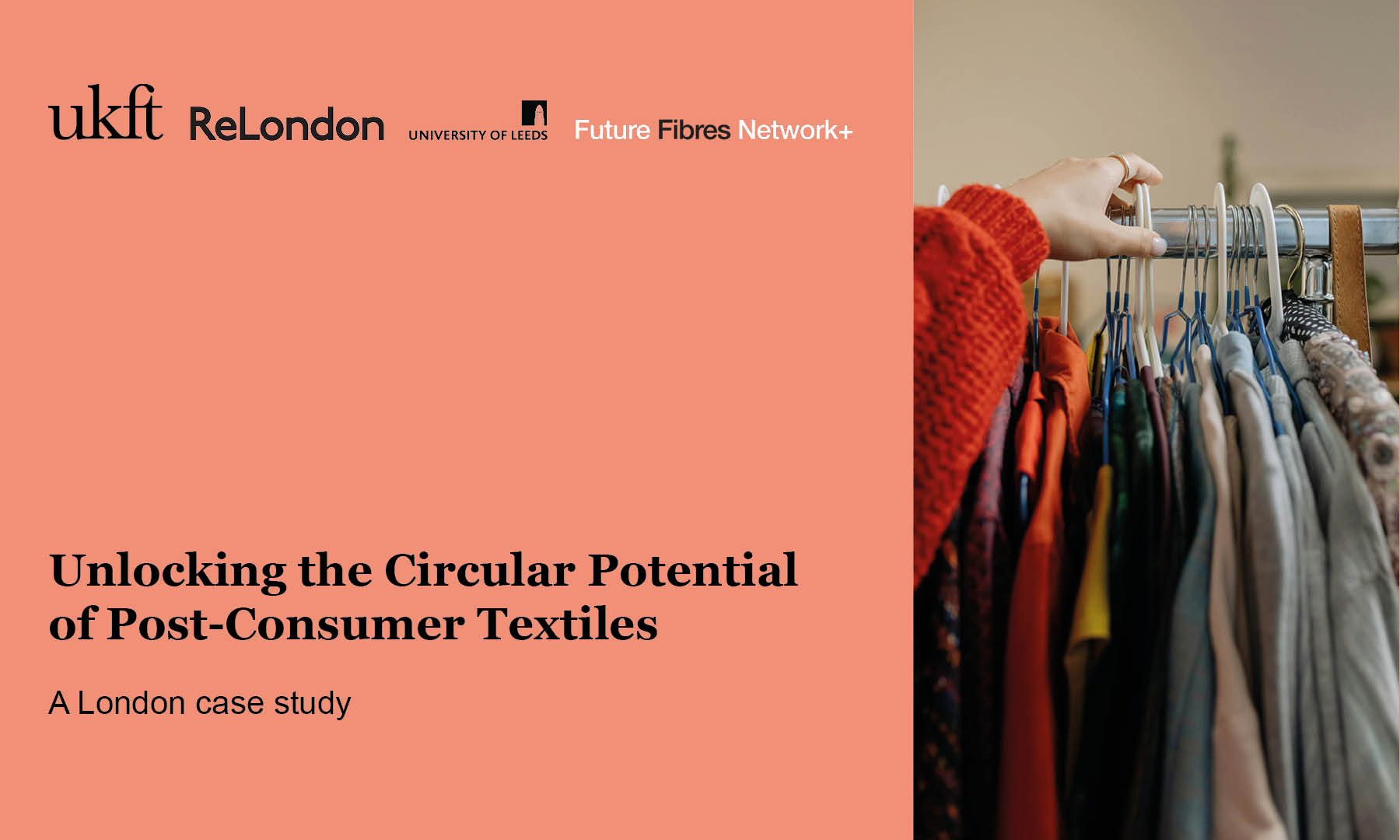
Developed by UK Fashion & Textile Association (UKFT), ReLondon, and the University of Leeds, and funded by the UKRI Future Fibres Network+, this research looks beyond traditional commercial models to explore how local authorities, textile merchants, and circular SMEs navigate current system challenges and opportunities. Drawing on industry interviews, and direct insights from London’s local authorities, here are a few key takeaways from the report:
- High volumes, low quality: High volumes of post-consumer textiles originate from cities with textile merchants reporting that textiles collected in London are among the lowest quality in the UK.
- The Power of Local Levers: With 53% of London’s textile collection and processing currently facilitated by just four organisations, local authorities and SMEs have a vital role to play in diversifying partnerships and de-risking new circular models.
- The Urban Opportunity: While cities generate high volumes of used textiles, London is rapidly becoming a hub for circular innovation. The challenge now is connecting local infrastructure with this growing wave of bottom-up solutions.
- Closing the Capacity Gap: Current markets prioritise fashion items, leaving a major opportunity to build better pathways for non-fashion textiles (like household linens), which make up 50% of the UK’s textile waste stream.
- Space Matter: High costs for physical space in cities often push textile sorting away from the source, delocalising post-consumer textile flows. Physical space support can make circular solutions local and scalable.
- Better Data, Smarter Flows: Fragmented reporting currently leaves incomplete datasets around waste volumes and composition. Building reliable, unified data collection is key to helping local authorities and businesses scale circular pathways effectively.
Dive into the full findings and our actionable recommendations for the sector by reading the report.
Thank you to the UKRI Future Fibres Network+ for funding this vital work, and to our partners at the University of Leeds and ReLondon, as well as the local authorities, merchants, and SMEs who contributed their insights.
Together, we remain committed to driving the knowledge and collaboration needed to accelerate textile circularity.