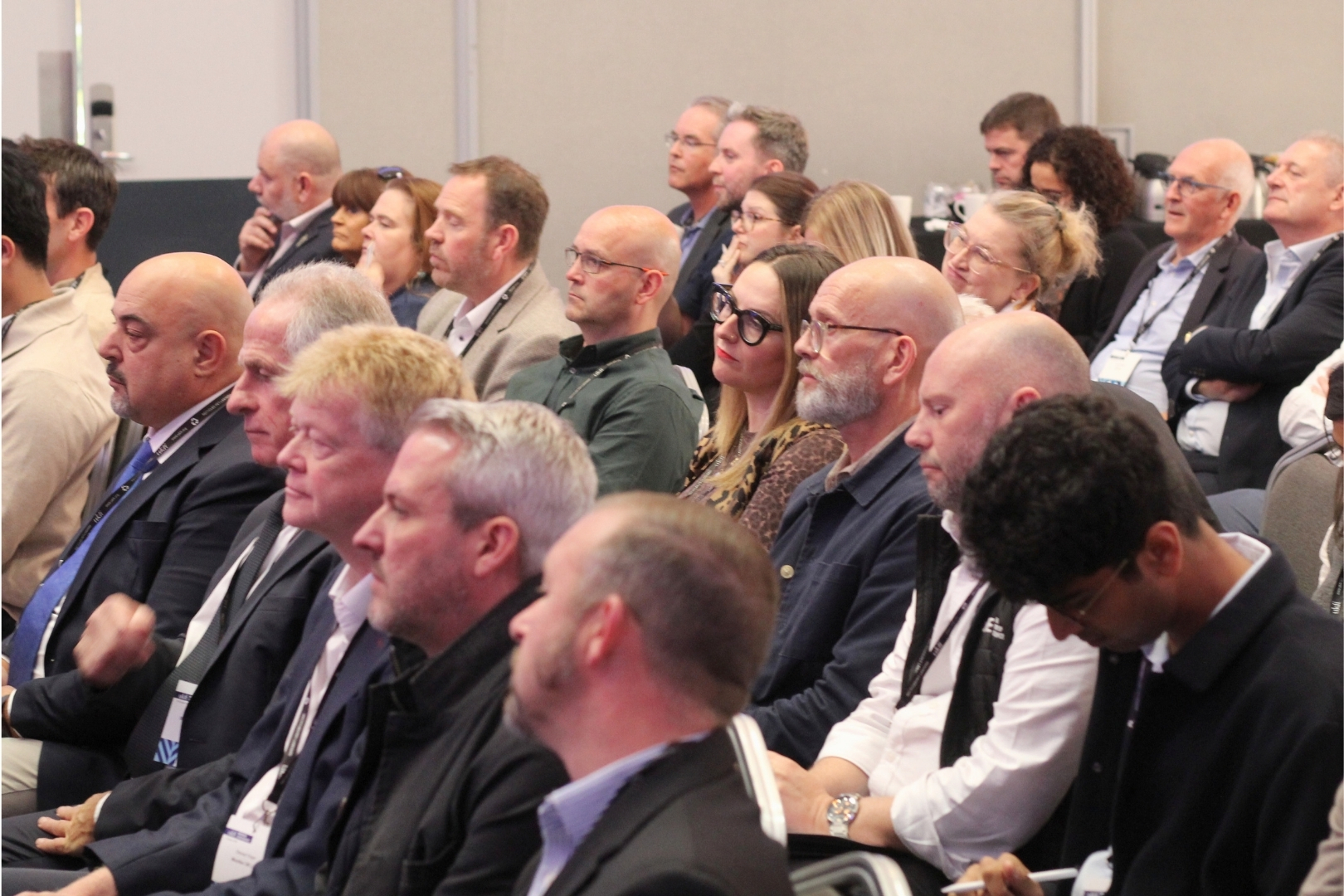
The programme brought together perspectives from manufacturers, machinery suppliers, technology specialists, brands and research organisations, with a clear focus on practical applications and the people who make change possible.
Understanding the opportunities ahead
Opening the conference, Adam Mansell, CEO of UKFT, highlighted the organisation’s ongoing engagement with the textile industry.
“So far this year UKFT has visited more than 60 textile businesses to understand the challenges you are facing. We have worked with more than 100 textile companies at export shows and spoken to many more through our events, webinars and roundtables.”
He explained that the conference aimed to help companies understand how innovation in technology can make their businesses more productive, competitive and resilient.
“Today isn’t about technology for technology’s sake. It’s about understanding what’s possible, seeing real examples and identifying where these technologies can genuinely improve productivity, quality, efficiency and decision making.”
Mark Jarvis, Chief Strategy Officer at Fibre2Fashion, then explored the economic, policy and market forces shaping the future of UK textiles, providing context for the discussions that followed.
Technology in action: machinery driving productivity today
UKFT’s textile membership manager Katie Robinson opened the machinery session with two practical questions: what can today’s weaving machinery do for manufacturers, and will it still be relevant in 10 years’ time?
For businesses on the factory floor, she explained, the priorities are reducing downtime, improving efficiency and getting more from existing resources without compromising quality.
Lutz Walter of the European Technology Platform presented his vision for Europe’s textile future, sharing insights into the innovation trends expected to shape the next decade.
Prence Kapur, sales manager for BMS Vision, updated delegates on the company’s latest innovations in advanced planning and scheduling, demonstrating smart data in action. Oliver Posselt, sales director for Karl Mayer, followed with the latest developments in smart solutions for sectional warping.
.jpeg)
Hannah Brown, weaving prep manager at Heathcoat Fabrics, showed how a series of small, practical improvements can deliver significant productivity gains without major investment in new equipment.
Her presentation outlined how the Devon-based company has worked closely with factory teams to understand processes, remove everyday barriers and measure the impact of continuous improvement. Examples included a 58.3% increase in departmental productivity and £100,000 in annual compressed air savings, demonstrating the value of involving the people who know the processes first-hand.
Applying innovation to manufacturing challenges
Introducing the next session, Katie Robinson explained how technologies such as AI, digital twins and digital dashboards can help manufacturers turn data into decisions.
Mark Simpson, co-founder of slurp, discussed AI in manufacturing. Rich Grieveson, co-founder of Shipshape Manufacturing, shared how his experience running an SME manufacturer and developing an AI layer over its existing ERP system to maximise efficiency led him to establish a consultancy to help other manufacturers do the same.
Laura Hayes, commercial lead at Gemell, presented her perspective on how digital twins can make UK weaving more productive.
Paul Mendis of PMSS Academy of Advanced Manufacturing explored how UK companies can build on their impressive legacy through a journey to digital excellence, alongside a practical guide to lean transformation.
Following lunch, delegates heard from three Catapult centres: the Manufacturing Technology Centre (MTC), National Manufacturing Institute Scotland (NMIS) and Advanced Manufacturing Research Centre (AMRC). These centres act as strategic research and innovation hubs for industry, helping to commercialise the UK’s most advanced manufacturing ideas.
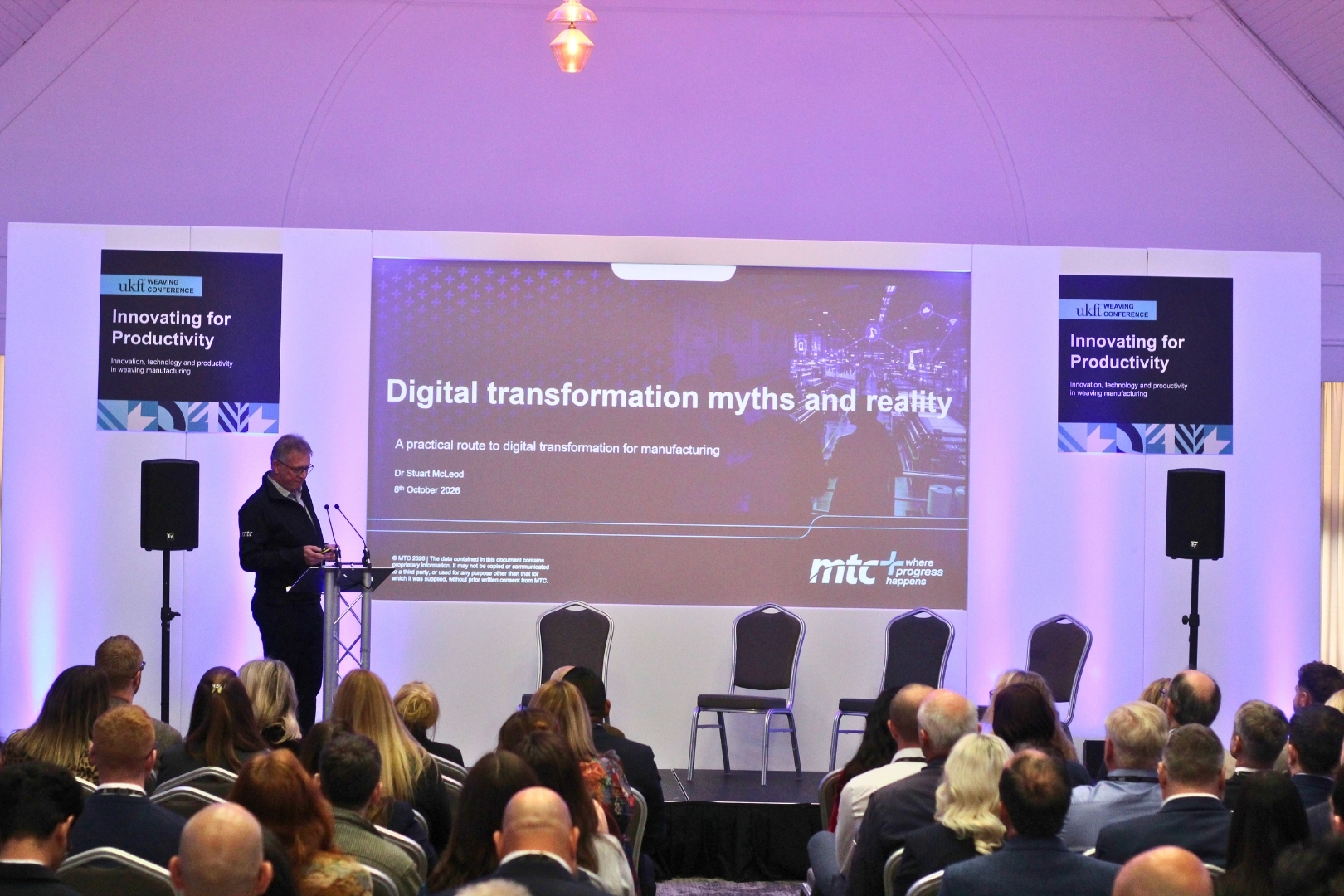
Dr Stuart Mcleod from MTC examined the myths and realities of digital transformation. Dr Ekaterina McKenna introduced NMIS and its capabilities, while Jody Turner PhD outlined AMRC’s latest work relating to warp speed and enhancing productivity through digital innovation.
Concluding this section, Claire Burns, Batina Aloisi, David Love and Abi McMahon presented how Abraham Moon is working with SNAP and Leeds Beckett University on a Knowledge Transfer Partnership (KTP) project.
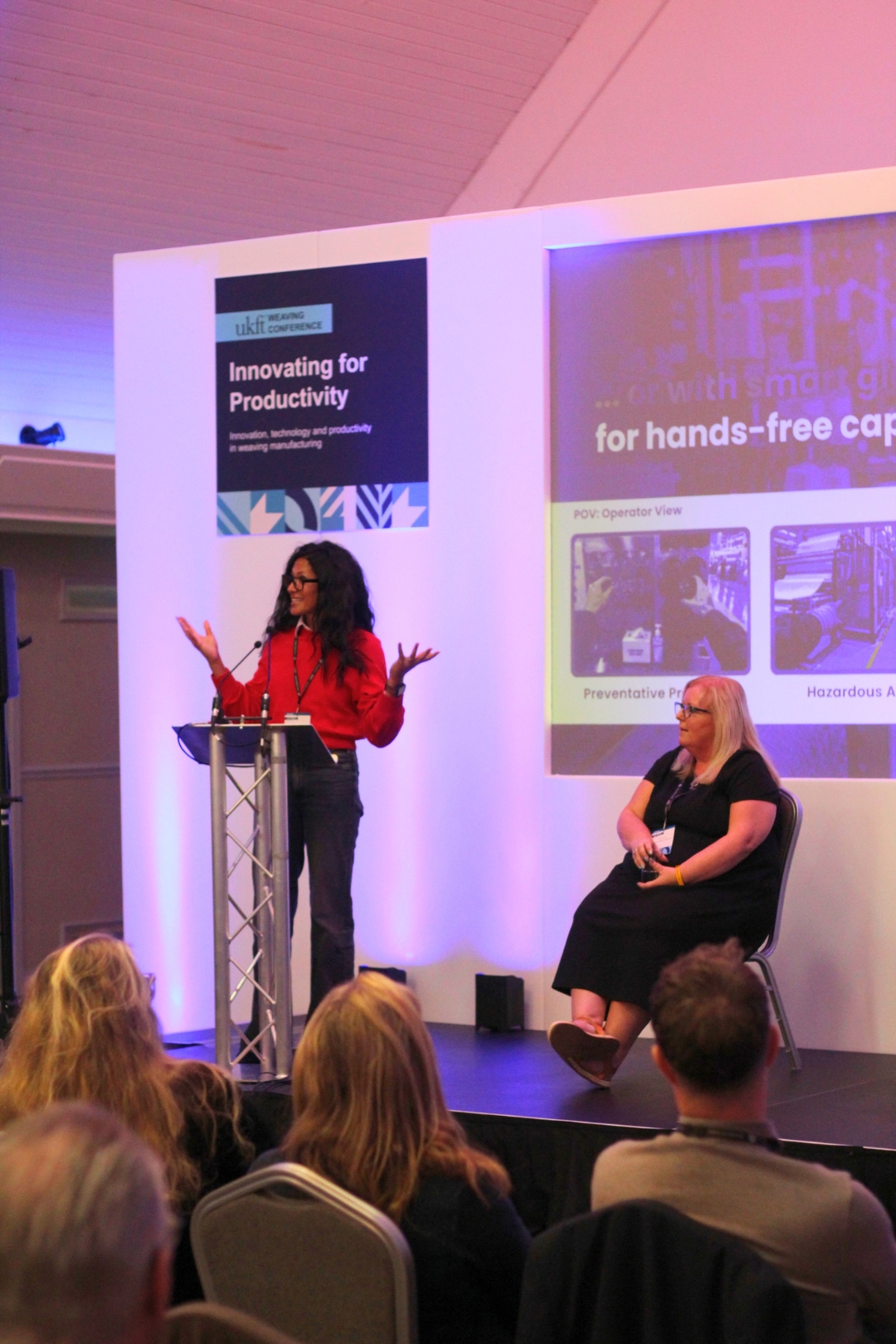
The project aimed to capture specialist expertise through digital training resources and develop a more adaptable, multiskilled workforce. The group emphasised that success depends on employee involvement and a culture of knowledge sharing, with technology supporting practical learning, succession planning and long-term business resilience.
Future supply chains and support for manufacturers
As part of the afternoon programme, UKFT’s Dan Connolly led a brand panel exploring what brands will prioritise in their future supply chains.
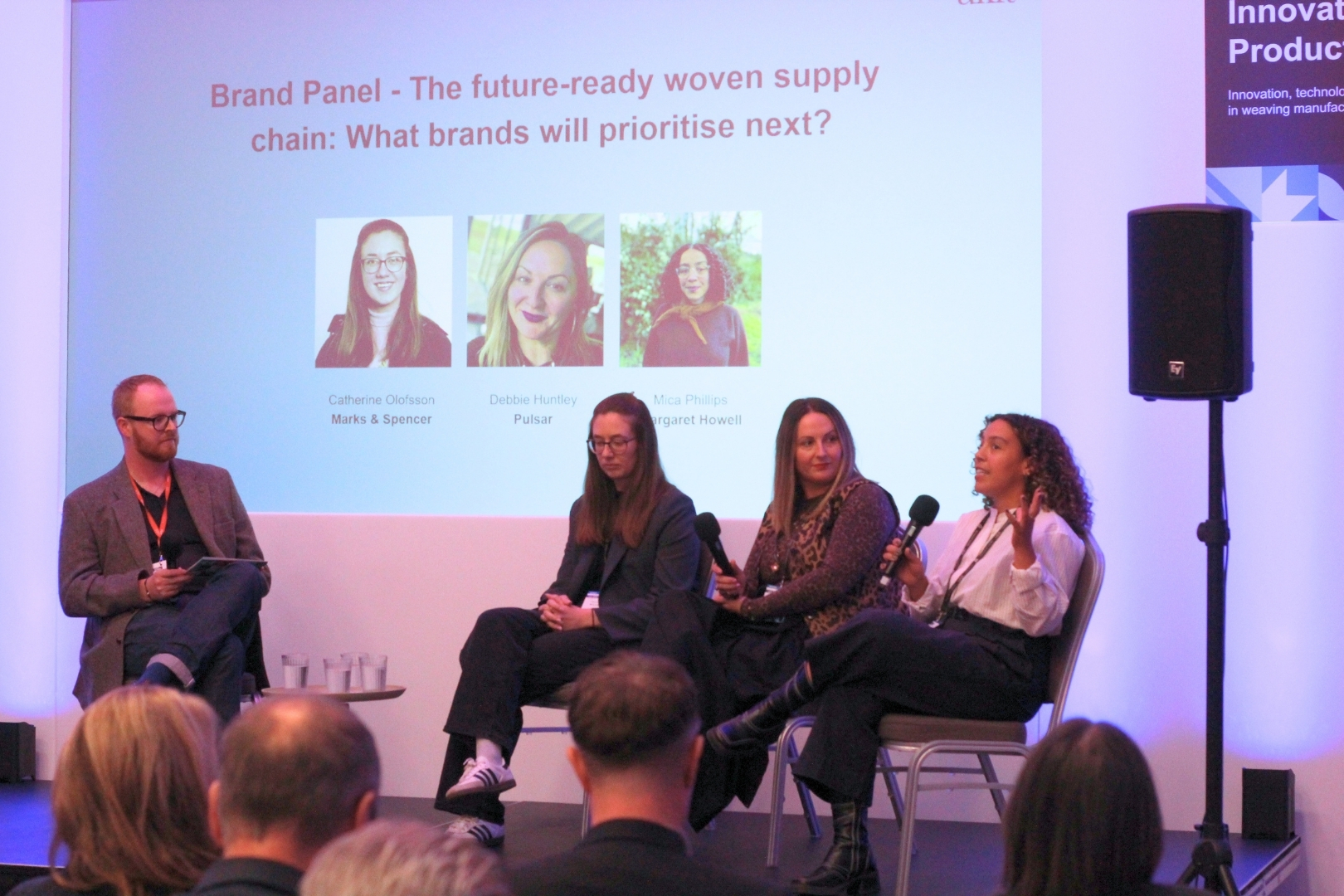
Catherine Olofsson from Marks & Spencer, Debbie Hutley from workwear and PPE specialist Pulsar, and Mica Philipps from contemporary British label Margaret Howell contributed their perspectives, connecting the day’s manufacturing discussions with the expectations of customers and brands.
Daniel Evans, senior account manager at energy consultancy Envantage, discussed managing energy as a strategic resource and outlined the schemes currently open to UK textile manufacturers.
Mili Tharakan, Knowledge Transfer Manager for Smart Materials and Textiles at Innovate UK Business Connect, explained how the organisation can provide support and connections for UK manufacturers, alongside current funding opportunities.
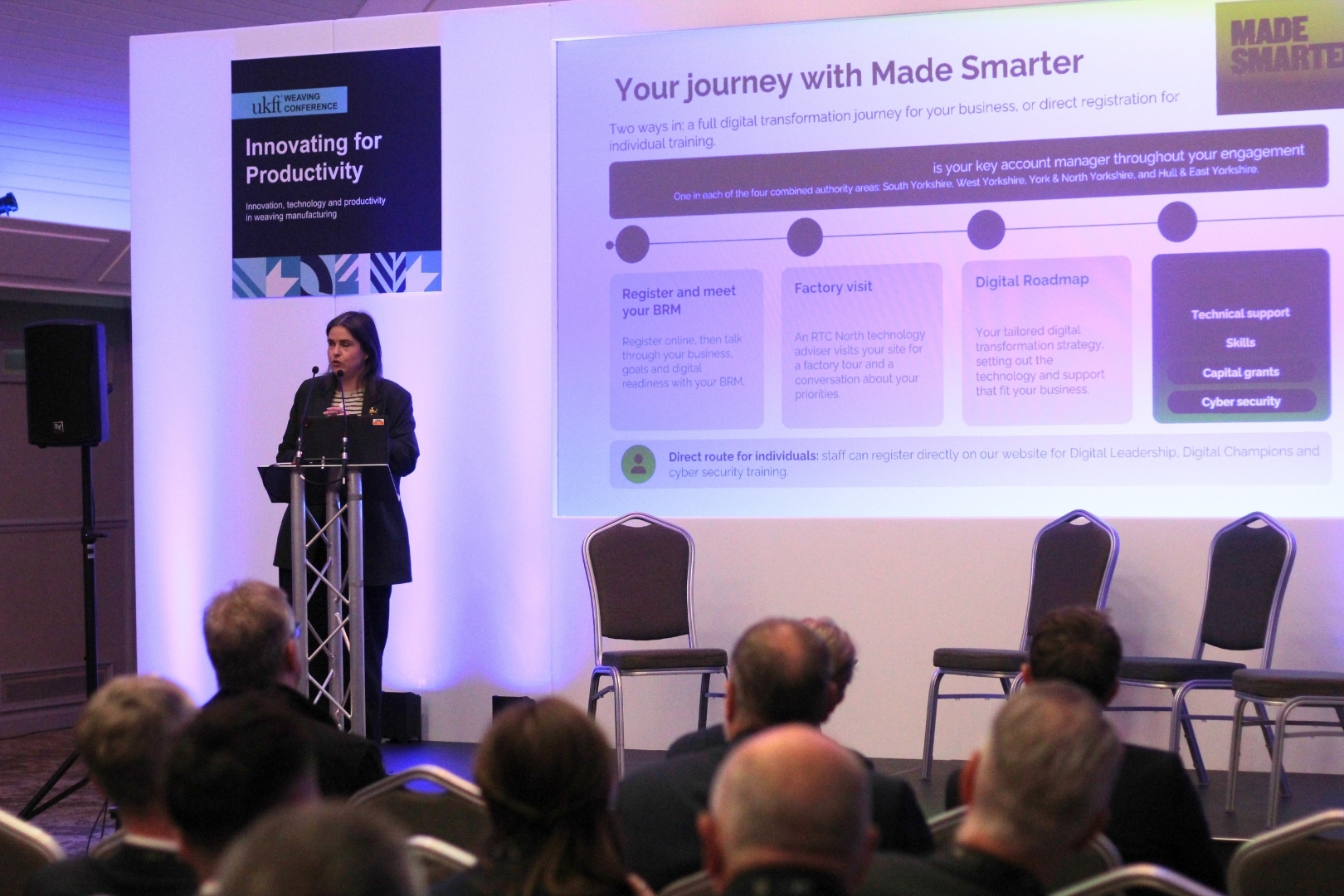
Jessica Armitage, programme manager at Made Smarter Yorkshire & Humber, outlined how the programme is helping manufacturers adopt digital processes.
Lorna Dempsey, Technical Transformation Director at Alex Begg Group, shared how the company has been transforming a 160-year-old textile business. Her message captured a central theme of the conference: “World class products should have world class processes.
Building on the strengths of UK weaving
Across the programme, speakers demonstrated how investment in technology, practical process improvements and workforce development can support the future of UK weaving. Employee involvement, knowledge sharing and collaboration were recurring themes, connecting machinery and digital innovation with the skills needed to put them to work.
Closing the conference, Tara Hounslea, Director of Communications at UKFT, said: “The future of UK weaving will not be secured by standing still. We will do it by taking what we do already exceptionally well and having the confidence to improve it, invest in it, challenge it and build upon it. By bringing together the people, knowledge, technology and collaboration. And by recognising that none of us have to do that alone.”
UKFT would like to thank the Weaving Group committee for its support in bringing the weaving community together, and all the speakers and delegates who travelled to Huddersfield to contribute to the day.
.png)