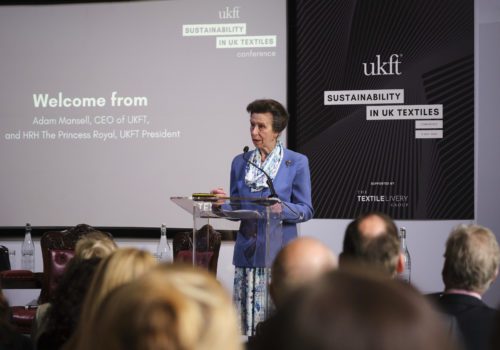
Innovation In Action
The UKFT Sustainability Conference 2025: Innovation in Action, held in London on 25 September, brought together more than 250 industry stakeholders, including brands, retailers, manufacturers, researchers, innovators, policymakers and funders, with the shared objective of exploring tangible innovations transforming the fashion and textile industry in the UK and beyond.
Watch: 2025 Sustainability Conference Highlights
With 38 speakers delivering 27 presentations, the conference showcased real-world developments in next-generation materials, dyes and colours, manufacturing processes and recycling technologies, reflecting the transition from discussion to actionable progress. Delegates highlighted this as a “real shift in momentum,” with 100% rating the conference useful and expressing interest in attending the next event, scheduled for 23 September 2026.
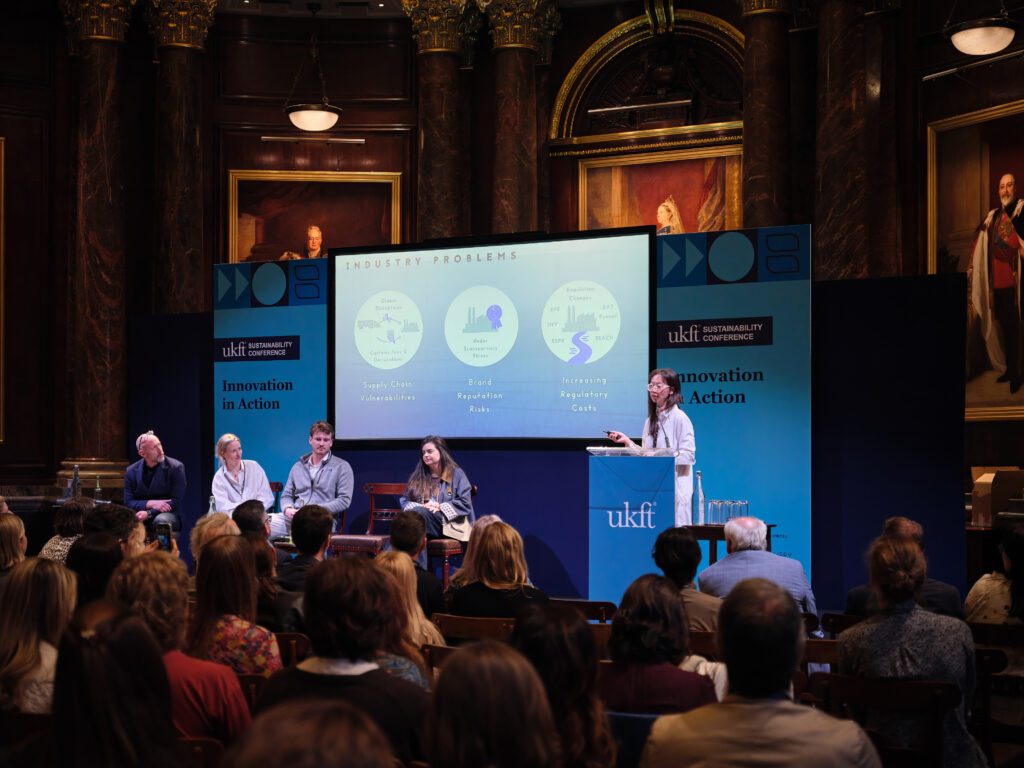
UKFT Sustainability Conference 2025 Credit: Ben Broomfield Credit Social: @photobenphoto Copyright: Ben Broomfield Photography 07734 852620 photo@benbroomfield.com www.benbroomfield.com
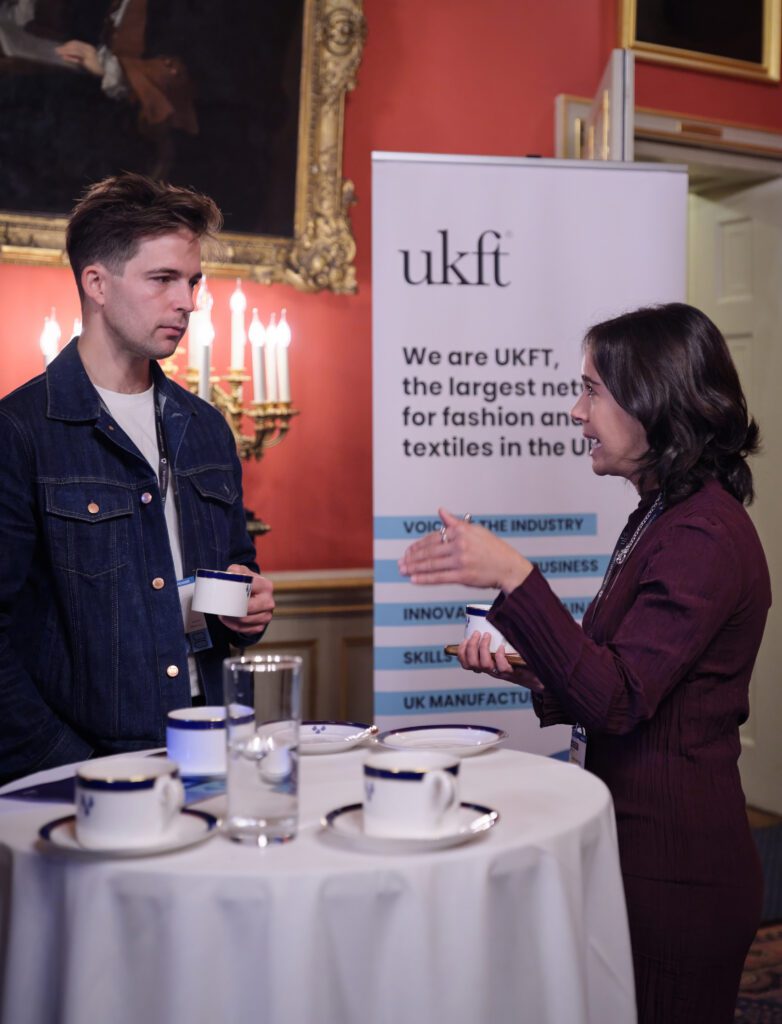
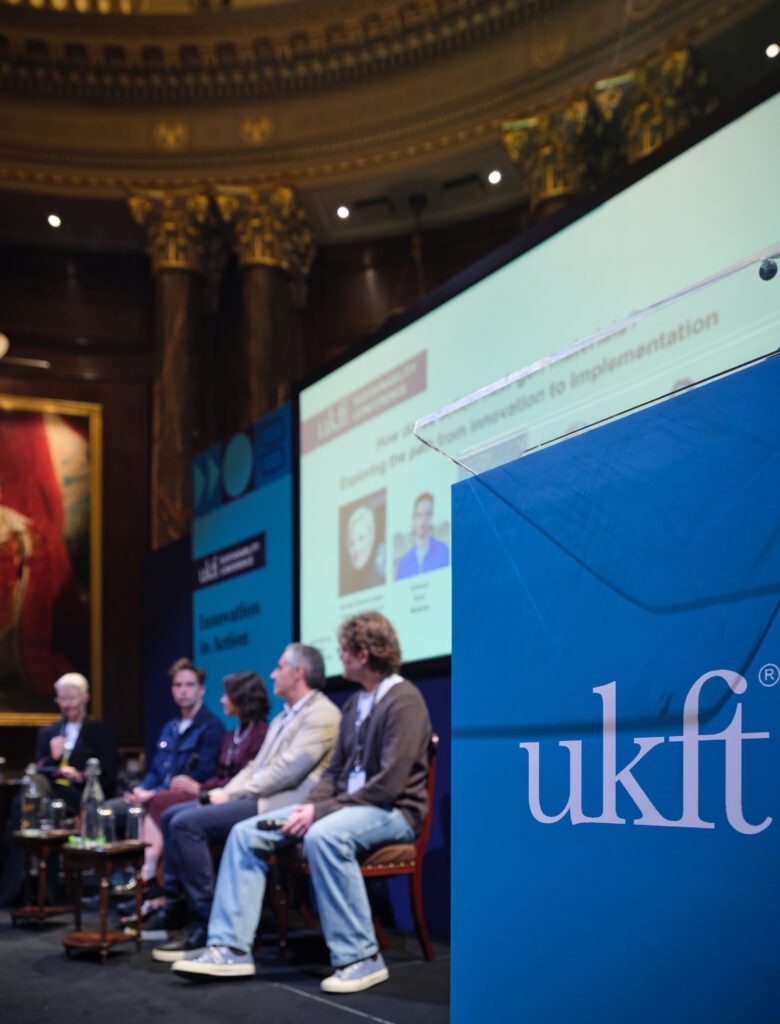
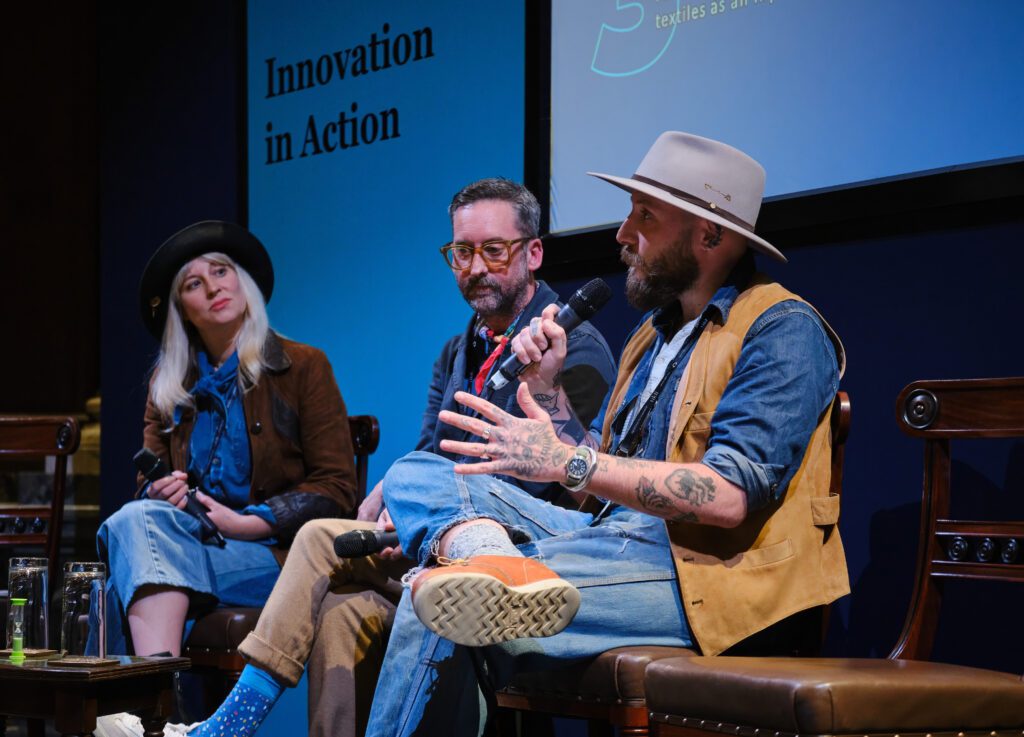
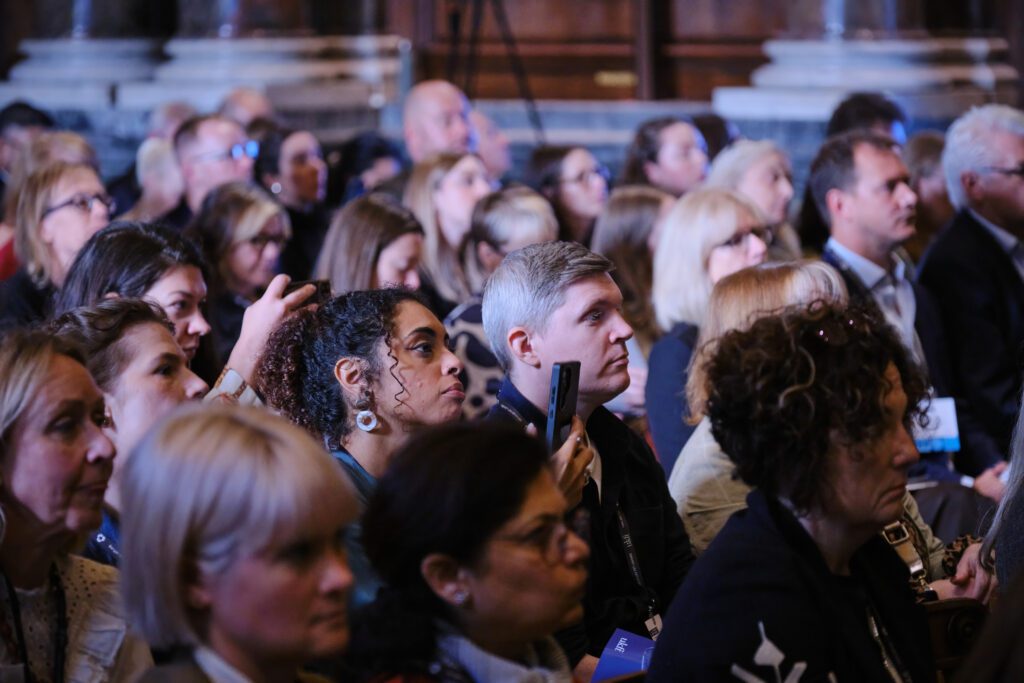
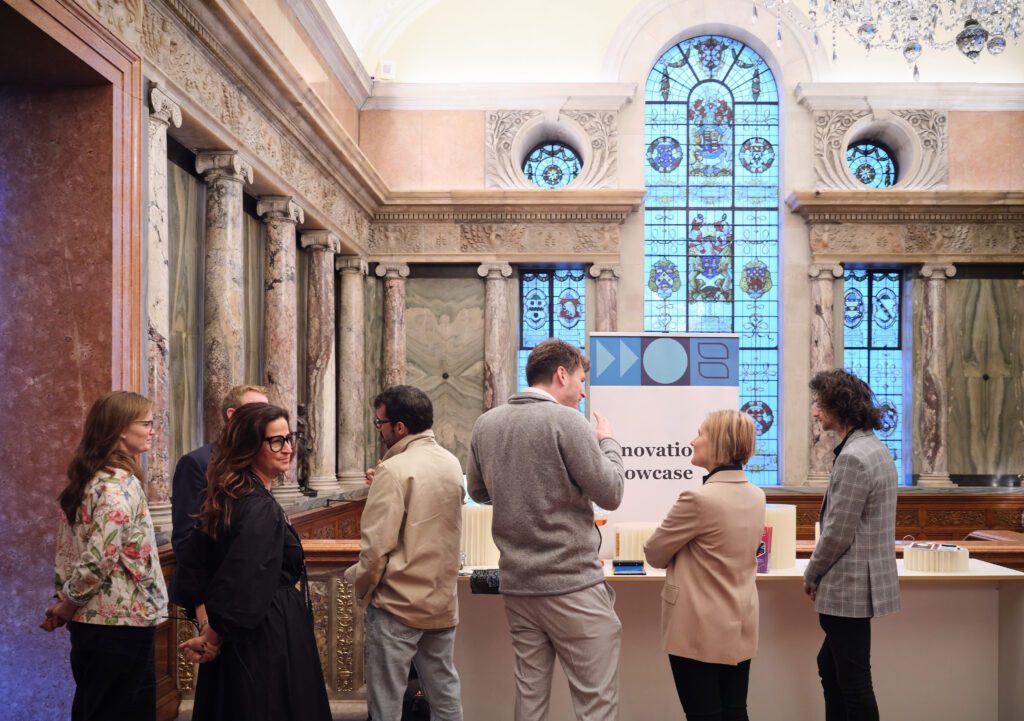
The importance of innovation
Adam Mansell, CEO of UKFT, opened the conference by presenting findings from the latest Sustainability Survey, which revealed that 87% of companies consider innovation critical to their future. Despite this recognition, companies also reported knowledge gaps, particularly regarding next-generation materials, low-impact dyes and recycling technologies.
Next-Generation Materials
The conference highlighted a range of innovators in sustainable materials and case studies to highlight commercial opportunities:
- Solena Materials develops AI-designed protein fibres, which are biodegradable and customisable, combining molecular design, microbial fermentation and wet spinning. The company is seeking partnerships to scale sustainable fibres in fashion and performance textiles.
- Ponda links wetland regeneration to textile fibres through paludiculture, creating carbon-sequestering, high-performance BioPuff insulation used by Stella McCartney and Berghaus.
- Modern Synthesis leverages nanocellulose for strong, biodegradable, low-impact alternatives to leather, addressing both sustainability and performance needs.
- Materra discussed a collaboration with Ecoalf demonstrated the impact of regenerative cotton supply chains, achieving substantial reductions in emissions, water use and increasing farmer incomes, illustrating field-to-fashion scalability.
- Rheon Labs discussed a collaboration with Soar Running which showcased strain-rate sensitive polymers for adaptive sportswear, demonstrating measurable performance improvements in muscle support and energy efficiency.
- Positive Materials explained how it bridges research and commercialisation, supporting regenerative, bioengineered, and waste-based textiles. The company’s portfolio includes collaborations with various UK based companies including Sparxell, Materra, Colorfix and DyeRecycle.
A panel discussion on next-generation materials, moderated by journalist and author Brooke Roberts-Islam, with representatives from Materra, Arda Biomaterials, Impetus Group and N Brown group highlighted challenges in supply chain integration, scaling beyond pilot projects, and meeting technical and commercial requirements. Collaboration, regulatory support, and rigorous R&D were identified as key enablers for market adoption.
Next-Generation Colours and Dyes
Professor Stephen Russell, Director of the Leeds Institute of Textiles & Colour (LITAC) at the University of Leeds, opened the session on next-generation colours and dyes by highlighting the vital role of innovation in delivering both aesthetic and functional value across fashion, interiors and technical textiles. He outlined key industry challenges and pointed to emerging innovations such as AI-driven colour forecasting, biobased and fossil-free dyes, waterless and low-chemical processes and recyclable dyeing systems. He highlighted the importance of how research partnerships are driving progress in this space.
Innovations and case studies presented included:
- Amphico: a toxic-free, waterless dyeing method that reduces CO₂ emissions by 16% and water usage by 55%.
- DyeRecycle: enabling fibre-to-fibre recycling and creating 100% recycled dyes, moving lab innovations into market-ready solutions.
- Post Carbon Lab: microbial-based coatings and colouration, capable of producing carbon-negative, non-toxic textiles.
- SwitchDye: a polyester dyeing technology that reduces chemicals by over 90%, energy by 49%, and enables circular processing.
- Alchemie Technology: a waterless, digitally controlled dyeing system achieving up to 85% energy savings and 95% reductions in wastewater.
A panel discussion moderated by Lizzy Dakin (UKFT) emphasized collaboration between innovators and established brands. Heritage brand perspectives from Barbour and insights from Amphico as an innovator reinforced the importance of performance, market readiness, and operational integration in driving sustainable dyeing adoption.
Next-Generation Manufacturing
Simon Platts from SP & KO Consultancy highlighted the reshoring trend, emphasizing the benefits of UK-based production for agility, transparency and reduced environmental impact.
Notable innovations and case studies included:
- MannyAI: AI-driven tools to optimize small-batch, localised production, enhancing efficiency, reducing waste, and enabling better brand–factory collaboration.
- LaundRe: a new low-volume denim finishing hub in London integrating advanced technologies such as laser marking, ozone bleaching, and nebulisation.
- Fashion-Enter Ltd: on-demand and ethical garment manufacturing combining digital sampling, fibre-to-garment processes and educational programmes to strengthen local supply chains.
- Sudbury Silk Mills: implementation of Robotic Process Automation (RPA) for operational efficiency, data accuracy and cross-department collaboration.
A panel on “Made in the UK” moderated by Tara Hounslea (UKFT) between representatives from Alex Begg, Gooddrop Cotton and British Wool explored how their companies are approaching innovation within traditionally rooted industries. Alex Begg, with over 150 years of heritage in scarves, blankets and accessories, discussed balancing respect for traditional craftsmanship with the need to evolve product development processes. British Wool highlighted the versatility of UK wool and the potential for innovation to enhance its value while maintaining authenticity. Gooddrop shared insights on pioneering indoor vertical-farmed cotton in the UK and the role of emerging technologies in complementing or replacing traditional agricultural practices.
Next-Generation Recycling
Recycling and circularity innovations were a core theme:
- Coleo: scalable textile recycling infrastructure delivering traceable, consistent feedstocks for industrial use.
- Epoch Biodesign: enzyme-based biological recycling of complex textiles, producing high-purity polymers for reintegration.
- Matoha: AI-powered near-infrared scanning for instant fibre composition analysis, enabling recyclability verification and efficient sorting.
- Seasalt x Beyond Retro: creative remanufacturing of post-consumer textiles, demonstrating significant reductions in CO₂, water and energy use.
The panel discussion “Are We Recycling Ready?” moderated by Adam Gardiner from Textile Exchange, addressed infrastructure, traceability and organisational alignment for taking the next step on the journey of incorporating recycled content. Representatives from Marks & Spencer, Primark, Reskinned and Epoch Biodesign discussed challenges in scaling recycled content and integrating technological advances, underscoring the need for collaborative development, consistent data, and investment to advance circularity in textiles.
A vision for a National Textile Recycling Infrastructure Plan
At the close of the conference, Adam Mansell from UKFT announced the launch of a national textile recycling infrastructure plan, developed through CFIN and built on two years of research and cross-sector collaboration. The plan focuses on four pillars (infrastructure, skills and workforce, technology and market capacity) and serves as a call to action for both industry and government to enable a scalable, circular textile economy in the UK.
WATCH ALL THE SESSIONS HERE
PLAYLIST: Sustainability Conference 2025
What the delegates said
- “Loved the 5-min pitch format. Keeps it brief, diverse, interesting.”
- “The pace of the day was perfect, very entertaining and I liked the scheduling with the speakers leading in to the panel conversations.”
- “I have attended a few times and it’s great to see projects that have been talked about in the past coming to fruition.”
- “I really appreciated the amount of content as well as the snappy, well-followed schedule! It was a good format to keep the attention up throughout the day.”
- Always has a room full of interesting intelligent people who know what they are talking about. I thought that this year the breadth of innovation was really well showcased”
- “I liked the networking opportunities, that the panels included retailers to bring back the commerciality to the event and it was in a good location with an appropriately sized room for the audience.”
- “Full house, lots of people attended, lots of further meetings arranged as a result. Great speakers. Beautiful venue”
*This is a private, invite-only event.
UKFT would like to thank the Textile Livery Group for their support in making this event happen.
About the conference



Past Sustainability Conferences

Sustainability Conference 2024: Tackling Textile Waste in the UK
The 2024 conference 'Tackling Textile Waste in the UK: Legislation, Impact and Solutions' explored a wide range of critical topics around textile waste
FIND OUT MORE