
UKFT report on Paris Women’s Fashion Week (March 2026)
23/03/2026
Paris Women’s Fashion Week (PFW) for the Autumn/Winter 2026–27 season took place from 3–11 March 2026, closing the international womenswear market calendar following New York, London and Milan. The event remains the most globally attended fashion market week, bringing together buyers, press and key decision-makers from across Europe, North America, the Middle East and Asia. Whilst most fashion weeks are about brand promotion and less about writing wholesale business, Paris remains the exception. For most women’s designer brands, Paris is the place where they meet their wholesale buyers to discuss and confirm orders for the “main” womenswear season even if they have seen them in Milan, New York or London.
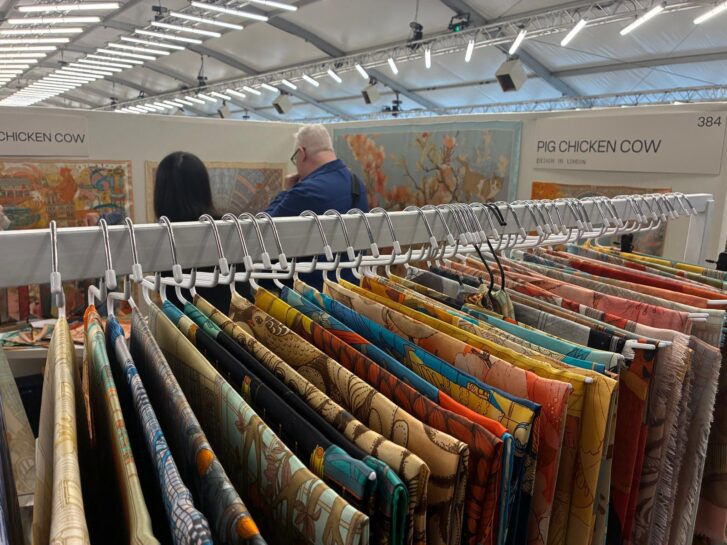
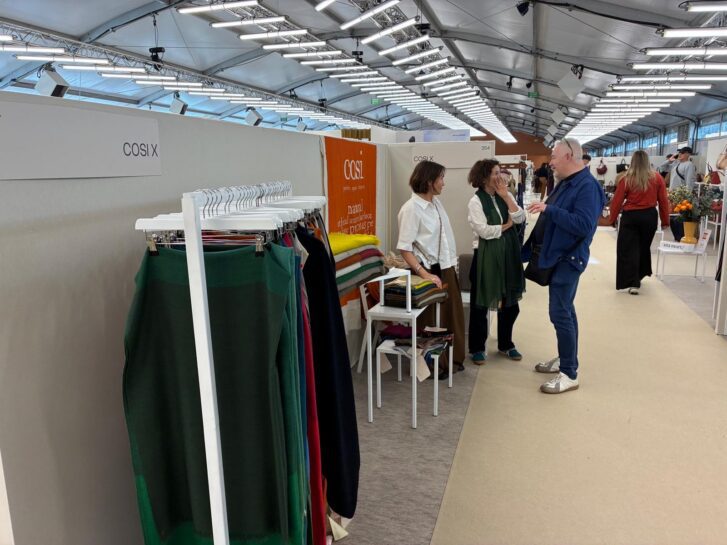
There were over 100 British brands and designers in the UKFT “Discover British Brands in Paris” map and promotion, which was supported by the Department for Business and Trade and publicised through Modem Online’s digital and physical PFW channels. The exhibitors were spread across leading tradeshows, multi-brand showrooms (many of which are British-owned and run), independent brand showrooms and runway presentations. Paris is always appealing for buyers from Asia (especially Japan and Korea), the US and the Middle East many of which only travel to Paris to buy.
Due to the clash of dates with Ramadan, this year, UKFT had not expected to see a massive Middle Eastern presence, as most Middle Eastern buyers had already placed their orders at the Paris women’s pre-shows in January. However, shortly before the event, the Iran conflict paralysed air traffic in the region and globally, leaving buyers stranded or unable to travel. Buyers who were already in Europe (for London and Milan Fashion Week) generally continued with their plans, whereas others cancelled or reverted to online appointments. More generally, the conflict and fears about its global economic impact led buyers to act very cautiously indeed, with some deferring order confirmations. Middle Eastern were seen at most shows and showrooms but in smaller numbers than in January. UKFT has heard that some have cancelled or reviewed previously confirmed orders for early Spring. By contrast, US buyers were reported as being bullish (not at every show) whereas Japanese buyers were buying carefully because of the weak yen. Interestingly, buyers from the Lebanon did travel.
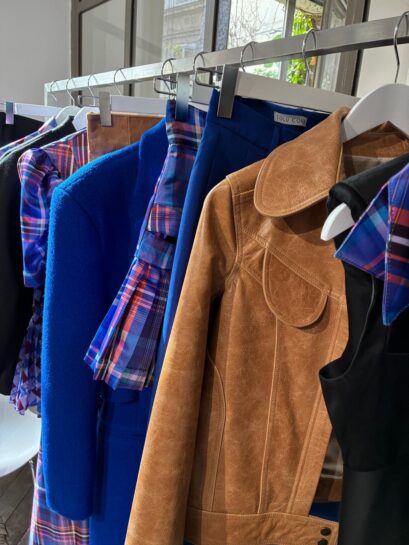
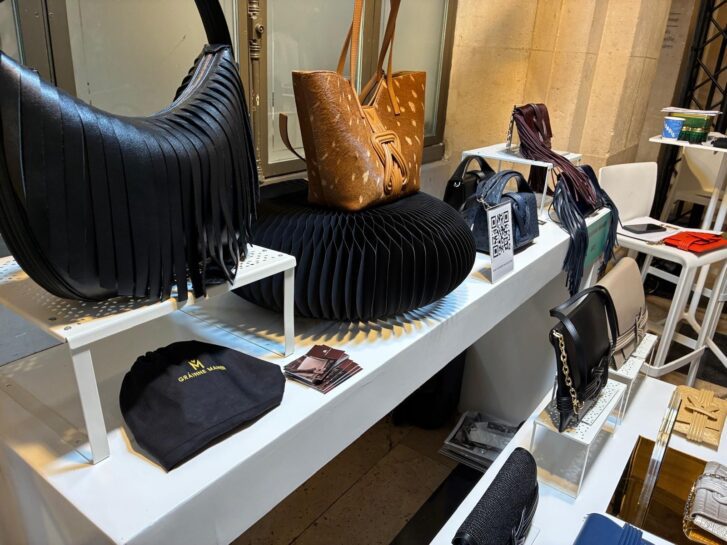
Claire Spencer-Churchill organiser of the new Le Cut/ show said: “Paris felt quieter this season; the streets, restaurants, hotels and the shows – there’s no denying that. The backdrop of ongoing tensions in the Middle East weighed on everyone, and the global retail climate remains incredibly tough”.
Emma Jones of Emma Jones Consultancy Showroom said: “Paris was a tale of two halves this season. We opened a new showroom on the 5th floor of Les Salons Hoche and received an amazing reaction from everyone that came but Paris Fashion Week was a quieter than expected, as the majority of our Middle Eastern clients did not travel. Buyers came but were cautious when placing new brands, preferring to see how the situation unfolds before making decisions.”
UKFT’s advice to companies concerned about the consequences of Middle East conflict is:
- Remain in contact with buyers to check whether they want to speak about issues they are facing, whether they expect to be able to accept existing orders and to confirm future business.
- Anticipate the broader challenges to the logistics and supply chain and rising energy costs as well as the effects of the crisis on global business confidence.
- De-risk your orderbook using secure terms of payment and/or considering including credit insurance to minimis risk.
- Use the technology to stay in touch!
- Be prepared and expect the unexpected!
Overview of the UK group
British exhibitors were located across several key selling environments:
- Major Paris tradeshows, including Tranoï Paris, Première Classe Paris and Matter and Shape as well as the new Le Cut/ show launched by the UK organisers of Splash!Paris
- Agency-led multi-brand showrooms, often located in the Marais district or the 8tharrondissement (between the Arc de Triomphe and Parc Monceau)
- Independent brand showrooms especially in the Marais, where designers host private buyer appointments in their own or rented spaces.
- Runway shows and presentations included in the official schedule of Paris Fashion Week.
This multichannel presence reflects the diversity of the UK industry, from emerging designers and independent labels to established luxury brands and heritage accessories companies as well as the importance UK companies attach to Paris as the city where they expect to write business.
UK brands at major tradeshows
Tradeshows remain an important entry point for international buyers seeking contemporary brands and accessories and vice versa.
Première Classe Paris
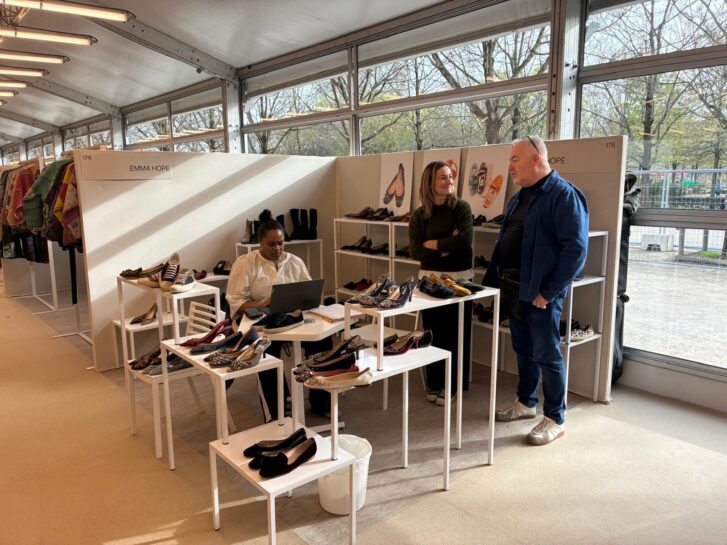
This long-established accessories tradeshow is an important show for accessories buyers and hosted many high end British brands including:
- Brady Bags
- Emma Hope
- Gushlow & Cole
- Kate Sheridan
- Glen Prince
- Mimi Berry
- Misa Harada
- St. Piece London
These brands specialise in leather goods, millinery, footwear, scarves and accessories, categories that traditionally perform well in international export markets. The show is a rite of passage for brands looking to sell quality accessories to global markets as it attracts most accessory buyers looking for new products and trends – even those who them spend much of their time in showrooms. Alongside Première Classe was RUN Showroom an avant-garde incubator space for emerging designer talents.
Katrina Cole of Gushlow and Cole showing at Première Classe said: “Overall, we found Première Classe to have a notably optimistic feel, with stronger buyer attendance compared to recent post-COVID seasons. Whilst we saw no buyers from the Middle East, the show felt particularly buoyant with American buyers. Key high-end boutiques and department stores were present with a confident mindset. A cold winter has driven sell-through for us, and there was a clear willingness to invest in quality, British-made products.”
Ting Hsu of St Piece, a regular exhibitor at Première Classe, said of his experiences: “Despite the beautiful weather in Paris during Fashion Week, there was a sense of unease and uncertainty. Almost all buyers from the Middle Eastern region and many of our US clients were missing. Buyers are increasingly placing orders for immediate delivery rather than committing to forward-order Autumn/Winter orders. On the positive side we saw many more Chinese buyers this season. Japanese buyers are also more active compared to the last few seasons.” This reference to Chinese buyers was interesting as there were clearly more Chinese buyers at the show although UKFT believed that they were primarily gravitating towards brands owned by ethic Asian businesses.
Tim Groves representing Glan Prince at Première Classe said: “The show opened with a very busy first day. We saw many buyers from Europe including the UK, USA, Korea and a few from Japan. From the buyers we saw and spoke with, we got a sense that there was more positivity for the coming year, many having seen a more positive start to the year sales-wise and feeling that this will carry through the coming seasons.”
Matter and Shape Paris
A newer Paris design-focused platform, Matter and Shape, hosted a smaller number of British designers:
- Abid Javed
- Completedworks
- Paola Petrocelli
- Vandavee Studio
This new concept space focuses on design-led brands and concepts spanning jewellery, accessories, furniture, art and lifestyle products. The organisers have invested heavily in the concept but it works on a very different business model compared to most of the other Paris shows, with substantial sponsorship around the experiential side of the show rather than being driven and assessed on the numbers of buyers placing orders. This is much more of a cultural look-see event.
Tranoï Paris
Tranoï continues to attract premium contemporary fashion labels and is increasingly home to a number of government-supported groups. This season the government groups and promotions included Africa (Canex) and Hungary. The show has a newly reinforced one-way system to ensure that buyers visit the entire show but this did complicate visits for visitors looking to connect with specific brands as they had to go against the flow. This became an irritant for some especially as some of the groups’ staff would jump on every visitor as they passed through. UK exhibitors included:
- Gráinne Maher
- Preston Knight
- Simeon Farrar
- Sula Clothing
The show started well with buyers clearly present and positive on the first day but became quieter over the weekend. Buyers and brands UKFT spoke to expressed concerns over the reinforced one-way layout of the show and the quality of some of the national groups showing whereas others were happy, especially if they were looking for European customers.
Le Cut/
This new selective tradeshow format picked up from Claret Showroom’s Resort and Cruise collections in a new location, just off the Champs Elysées with some additional knitwear and other collections:
- Brodie Cashmere
- Chinti & Parker
- Hayley Menzies
- Madeleine Thompson
- Muzungu Sisters
- Queens of Archive
- Sister Jane
The show was well presented, bringing together brands which had previously shown at the Claret standalone showroom at Salle Erard but with a slightly broader offer.
Claire Spencer Churchill organiser of the show said: “Paris remains the benchmark for shows —if you’re not showing here, you’re simply not in it to win it. And that’s exactly why we’re so excited to bring Le Cut back for its second edition this October fashion week and Splash Paris in June.”
Multi-brand showrooms and agencies
A large number of UK brands exhibited through established Paris showroom agencies. These showrooms, (many of which are British or Italian-owned) operate on an appointment-only basis and allow buyers to view several brands within one location.
Key agencies presenting British labels included:
- Arddun Agency
- Awaykin Showroom
- Brera Mode
- CSM Italian Agents Collective including Studio Zeta, Daniele Ghiselli and Elisa Gaito
- Emma Jones Consultancy
- LondonSHOWrooms organised by the British Fashion Council
- Polly King & Co
- Rainbowwave Showroom
- The Alphabet Showroom
These showrooms play a crucial role in the wholesale ecosystem, particularly for independent brands which rely on agency representation and contacts to access international retailers.
Yuko Fujita of Tora Tora Showroom said: “Overall, the week went well despite the wider geopolitical backdrop. There was a slight decline in the number of buyers attending; for example, a few Japanese buyers were stranded in Doha and unable to make it to Paris. On the surface, the mood appeared fairly normal, but there was a subtle sense of uncertainty underneath. That said, several important retailers came to review the collections and buyers seemed more relaxed compared with pre-collections in January, perhaps due to less time pressure between appointments.”
Jason Leung of The Alphabet showroom said: “The week was quieter than usual. We saw around 50% fewer buyers compared with last March although we are also seeing a shift to January . The situation in the Middle East meant some buyers, especially from Asia, cancelled their trips at the last minute but we still had a good mix of buyers from Europe, the US and, indeed, some parts of the Middle East.”
Use of technology, such as Zoom calls from the showrooms to connect with buyers who were unable to travel was a constant theme. Indeed some showrooms including PaperMacheTiger have made consistent use of zoom appointments ever since Covid. Darren Hildrow of Nouvelle Box showroom said: “Paris Fashion Week felt noticeably quieter than usual. From conversations with other showrooms, it was clear that the current situation in the Middle East made a significant impact. There were also fewer attendees from Australasia and parts of Asia. You can already see how it’s affecting businesses and people’s livelihoods, even thousands of miles away. At NouvelleBox, these events have encouraged us to accelerate our plans to redevelop our digital platform, with a focus on making it easier for brands to connect with buyers and place orders online to keep businesses moving forward and save people’s livelihoods.”
Polly King and Rainbowwave had seen most of the buyers they had planned to see during the week and the British Fashion Council said that it was particularly pleased with the number and quality of US retailers committing to work with new and innovative British designers at LondonSHOWrooms.
Independent brand showrooms
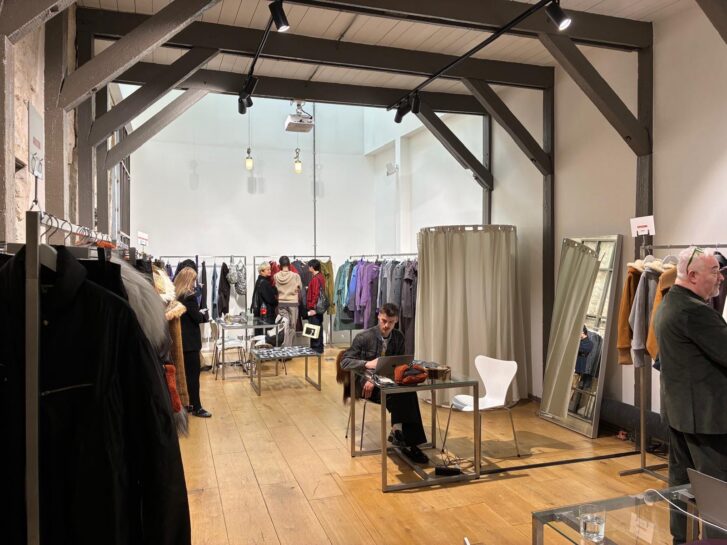
Several British designers hosted their own private showrooms, often located in central Paris apartments or gallery spaces. These settings enable longer and more personal appointments with key buyers and press. The Brits in Paris map makes it easier for buyers to find independent brands showing in disparate locations.
Brands included:
- Dear Frances
- Conner Ives
- Edeline Lee
- IA London
- Jenny Packham
- Huishan Zhang
- Lindsay Girvan
- Rixo London
- Sabina Savage
UKFT was able to visit a number of these who generally reported that they had seen their main appointments and that business had been confirmed. The Brits in Paris map was cited by a number of these as a very useful tool which buyers use to navigate their way around Paris during the week.
Philippa Rhodes at Rixo reported that they had has a successful week with most of their appointments confirmed or, for those who had to change their travel plans, moving to zoom. Similarly, Sabina Savage had an exceptionally busy programme and Lindsay Girvan reported a very successful week.
Ira Avezov of IA London, showing in her own space in the Marais said: “In a season marked by a complex global climate, we saw a shift in buyer sentiment. Perhaps because of these challenges, there was an even deeper focus on artistry and craftsmanship with buyers looking for authenticity and uniqueness. For those who could not travel, including our Australian buyers, we were able to use technology to bridge the distance—recreating the sensory experience of our showroom and allowing the collection to be explored intimately from afar.”
Cozette McCreery representing Stephen Jones Millinery showing at Dover Street Market Paris said: “As one of the few brands invited to show at the DSM Paris it is always interesting to see which stores come through. There were fewer Japanese buyers, presumably down to the weak Yen. Other long haul travellers from Australia and even the US were thinner on the ground although our earlier US trunk shows had been well received. By contrast we saw more French, German and other European stores too.”
Daisy Yu at Jenny Packham, showing on Rue de Faubourg St Honoré said: “The Jenny Packham Fall 26 main collection was met with strong enthusiasm in the Paris showroom. Although we had a number of cancelled appointments, clients quickly pivoted to virtual meetings to complete their selections. We extended the showroom by a day, supporting continued wholesale growth across Central and Southeast Europe as well as the Americas. The early release of exclusive April capsule pieces was particularly well received.”
British designers on the Paris Runway
A number of prominent British designers presented runway collections as part of the official schedule of Paris Fashion Week. These shows primarily generate global media attention whilst sometimes (not always) supporting wholesale sales taking place concurrently in showrooms (*).
- Victoria Beckham *
- Stella McCartney *
- Vivienne Westwood
- Margaret Howell
- McQueen
- Kiko Kostadinov
International buyer attendance
Paris remains the most internationally attended fashion market week. Feedback from UK exhibitors suggested that several markets maintained strong in-person attendance in March 2026:
- Europe: France, Italy, Germany, the Netherlands, Belgium and Scandinavia plus the UK – said to be stable but cautious. There are signs that French and Italian luxury sales in particular are cooling as the global economy reacts to an uncertain new world economic order especially in those emerging manufacturing behemoths in Asia targeted by the IEEPA tariffs.
- North America: United States and Canada – generally upbeat and positive. US buyers seemed particularly positive in spite of the US tariff fluctuations whereas Canadian buyers were looking for non-US product, as we had seen earlier in the year
- Asia: Japan, South Korea and China – Japan and Korea were said to be stable but cautious whereas China was well represented this year, not just by Paris Buying Houses, with special interest in new collections from ethnic Chinese designers
- Middle East: UAE, Saudi Arabia, Qatar, Israel and Lebanon – in spite of events in Iran, the Gulf and Lebanon and the clash with Ramadan some buyers did travel.
Speaking more broadly on the week, Katrina Cole of Gushlow and Cole at Première Classe reflected on the challenges in many of the UK’s traditional markets: “The European market remains significantly more price-sensitive. Import duties and customs charges continue to hinder conversion, and there is a noticeable shift towards more competitively priced, Turkish-made alternatives. There are still no clear signs of recovery post-Brexit in UK-EU trade. Meanwhile the Asian market remains unpredictable. While our established Japanese partners remain consistent, there were notably fewer Korean buyers.”
Despite ongoing changes in buyer travel patterns, Paris remains the most important global marketplace for designer womenswear. Whilst March remains an important part of the calendar, an ever increasing number of more commercial women’s brands and showrooms (by no means all) are writing their business early with some designers choosing January over March. This is an issue which is less challenging later in the year when there is a greater gap between the June and September/October dates and the potential for top up and “Holiday” orders later in the year.
Paul Alger MBE, International Business Director at UKFT said: “The new world economic order together with the Middle East conflict have dramatically impacted this edition of Paris Fashion Week. Whilst most UK companies have seen buyers and placed business, especially in the US, buyers have factored in an assumption that the conflict will be resolved relatively shortly. If this is not the case, buyers could still revise or cancel orders. UKFT is keeping a very close eye on the situation and how it impacts on future business for the sector.”
UKFT’s DISCOVER BRITISH BRANDS
UKFT’s work in Paris is supported by the Department for Business and Trade (DBT), enabling it to coordinate and promote the strength of British creativity and design as part of its “UKFT Discover British Brands and Textiles” campaign.
Follow UKFT on Instagram @ukftorg and visit Discover British Brands campaign to find out more about the British brands showing in Paris.