
John Smedley and FTCT: A partnership that puts people, wellbeing and responsibility first
14/01/2026
Choosing the right charity partner is about more than shared visibility. It is about shared values, relevance and a genuine commitment to people. Jess McGuire Dudley, Managing Director of knitwear brand John Smedley, reflects on why the business chose to partner with the Fashion & Textile Children’s Trust (FTCT), and how the relationship has become an integral part of its approach to wellbeing, employee support and responsible business. From financial wellbeing and colleague advocacy to heritage and community impact, the conversation highlights how a purpose-led partnership can strengthen culture, create meaningful engagement and deliver real support where it matters most.
UKFT: What were the main motivations for John Smedley to partner with FTCT?
Jess Mcguire-Dudley: Our motivation to partner with the Fashion & Textile Children’s Trust stemmed from its strong connection to our industry and its commitment to supporting individuals and families during times of financial hardship. As a brand with a long heritage in British manufacturing, we deeply value FTCT’s legacy and the way its mission aligns with our own values of care, community, and responsibility toward our people. We were also aware of a colleague who had benefited from the support offered by the FTCT, so had a live case study where we could immediately see the great work they undertake, We were also particularly inspired by FTCT’s CEO Anna Pangbourne, her passion and enthusiasm are un-matched and infectious.
How did you ensure that this partnership aligned with your existing employee-wellbeing and corporate culture goals?
JMD: Wellbeing is a key focus at John Smedley, and we’ve launched several initiatives supporting physical, mental, and financial health. FTCT aligns perfectly with our financial wellbeing goals, offering colleagues valuable support when facing financial challenges. Giving back and making a difference is central to our culture, so partnering with an organisation that has such a positive impact within our industry feels like a natural fit.
At the start, what messaging themes did you focus on?
JMD: We focused on our three pillars of wellbeing, physical, mental and financial, with a particular emphasis on the financial support available through FTCT. We launched the partnership via our recently launched ‘Culture Club’ a group of employee volunteers whose sole remit is the holistic support the company can offer employees. This was important as we felt that having colleagues recommending the service was a great way to make the support more accessible and remove barriers for those in need. This was followed by in-person sessions across our sites, helping to bring FTCT’s work to life and show how their support can make a difference, whether needed now or in the future. Employee support was a key message, even if you don’t need help personally, you may know a colleague or family who could benefit.
What have you done with employees to support FTCT so far?
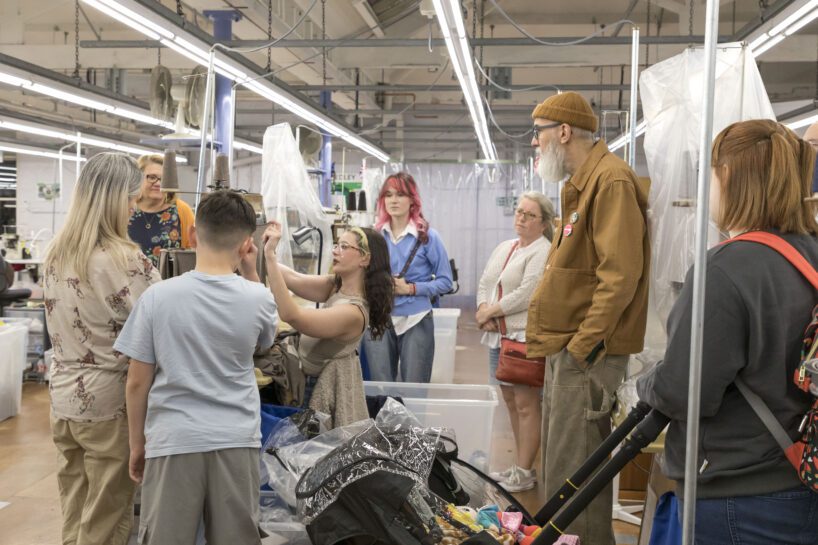
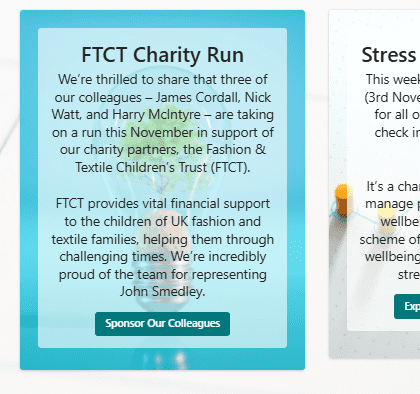
JMD: Last summer, we hosted a Family & Friends Open Day at our historic mill, where colleagues were able to share their workplace with loved ones and learn more about FTCT through an onsite stand showcasing their services. Following this, our employee ‘Culture Club’ has continued to promote the service holistically, supported by regular updates in our quarterly employee publication, The Loop. Several of our colleagues have also taken part in charity runs, covering 5–10k in support of FTCT. Alongside this, we have encouraged a number of employee-led initiatives to raise awareness and funds, and we donated a personalised cashmere piece featuring FTCT’s button logo for one of their charity auctions.

How have these activities been communicated internally and externally?
JMD: We’ve created a dedicated section on our intranet to share FTCT resources and updates, and we regularly feature their campaigns, such as Back to School and Winter Support, in company updates and team meetings. Externally, we’ve used our social media platforms to raise awareness, celebrate activities, and encourage colleagues and followers to support FTCT’s important work.
What role have employees played in shaping the messaging around the partnership?
JMD: Our colleagues have played a key role in shaping and sharing the message around our partnership with FTCT. Through colleague-led initiatives, they’ve helped to raise awareness and make conversations about financial wellbeing feel more open and normalised across the business.


How have you ensured the messaging around the partnership is consistent across different channels?
JMD: For us, the why behind the partnership has been key, we wanted everyone, both internally and externally, to understand that this collaboration supports a fantastic organisation that, in turn, supports our people. Across all channels, we’ve kept our communications engaging, warm, and supportive, helping to break down barriers and encourage open conversations around financial wellbeing.
Have there been any challenges in maintaining consistent messaging? How were they addressed?
JMD: We haven’t faced any challenges, as we’ve kept a strong focus on the why behind the partnership. By ensuring all communications, both digital and in-person, are unified and shared collaboratively across HR, marketing, and senior leadership, we’ve maintained one clear and consistent message throughout the business.

In what ways has embedding the partnership helped reinforce or shift the company’s culture of care and wellbeing?
JMD: We’ve already seen a positive shift in our wellbeing culture, particularly around financial wellbeing. Even when colleagues don’t personally need FTCT’s support, our initiatives have helped create a safe space to talk about financial challenges more openly. This has normalised the conversation, encouraged new levels of engagement with HR and other stakeholders, and strengthened our overall culture of care and connection.
How has the partnership contributed to reinforcing or evolving John Smedley’s brand purpose internally and externally?
JMD: This partnership directly reflects one of our core brand values, Responsible. We genuinely care about the wellbeing of our colleagues, the communities we serve, and the wider fashion and textile industry. Partnering with FTCT reinforces our purpose of being a responsible employer by promoting financial wellbeing and providing meaningful support, while also contributing to a more responsible and caring industry as a whole. The partnership has also inspired wider support for communities and staff with the company recently taking on the sponsorship of the local playgroup after colleagues brought it’s potential closure to our attention, By sponsoring 24 sessions per year we’ve been able to make sure our teams have the local childcare they require.
What tangible outcomes have been achieved so far from the partnership?
JMD: We’ve already seen a direct impact, with one of our colleagues accessing FTCT’s support to help remove financial barriers and create a safer living environment for their family. Our fundraising initiatives have also generated additional support for FTCT, and we’ve seen growing employee engagement through colleague-led activities, which continue to build awareness and connection across the business.
How have employees responded to the partnership?
JMD: Employee engagement has steadily increased since the launch of the partnership. Colleagues are actively reaching out with ideas to support FTCT, whether through fundraising or awareness initiatives, and are proud to be part of something that makes a real difference. Feedback has been overwhelmingly positive, with many recognising the partnership as a fantastic initiative that directly supports our people, especially after seeing the impact it’s had on a colleague who has benefited from FTCT’s support.

How do John Smedley and FTCT plan to sustain and evolve the partnership messaging and activity over time?
JMD: We’re committed to keeping the partnership active and evolving, consistency is key. Our goal is to make conversations around financial wellbeing, and FTCT’s support in particular, part of everyday life at John Smedley. We’ll continue to promote their services and fundraising opportunities through regular company updates, enhanced communications, and the introduction of FTCT ambassadors and employee-led initiatives to keep awareness and engagement growing.
From the perspective of John Smedley, what lessons have been learned about integrating charitable partnership into employee-activity and communications?
JMD: We learned that engagement increases significantly when we communicate the why behind the partnership and bring it to life through direct, personal interaction. Our face-to-face and Teams sessions helped colleagues truly understand the dual purpose of the partnership, providing vital support to our people while also giving back to our wider community and industry.
What advice would they give other organisations in the fashion and textiles sector looking to embed similar partnerships into their culture and messaging?
JMD: Take the time to introduce the partnership properly, with care, empathy and authenticity. Create space for colleagues to ask questions and understand the purpose behind it. When people see how the partnership can benefit both their peers and the wider industry, it becomes far more meaningful and naturally embeds into the company culture.
How can the partnership remain fresh and relevant to a diverse workforce?
JMD: We believe it’s important not to stand still. We’re always exploring new ways to promote the partnership, fundraise, and raise awareness across all areas of the business. By empowering colleagues to share ideas and lead their own initiatives, we keep the partnership dynamic, inclusive and relevant to our diverse workforce.
John Smedley is a member of UKFT.
Interested in becoming a member? We provide businesses from across the industry with knowledge and support that covers business essentials, sustainability, international business, skills, compliance, manufacturing and more. Click on the link below to find out more.
Get in touch with the Fashion & Textile Children’s Trust (FTCT) to explore ways your business can get involved or to apply for a grant. Contact FTCT CEO Anna Pangbourne at anna@ftct.org.uk.
Read next:
How UK textile companies are embracing change to attract new talent