
Earth day 2026: The people and processes shaping a more sustainable future
21/04/2026
Sustainability in fashion and textiles starts with the fibres chosen at the very beginning and continues through every stage of design, manufacture and use, right through to repair, reuse and recycling.
Across the UK fashion and textile sector, a growing network of innovators, manufacturers and educators are rethinking how products are made and how long they last. This Earth Day, we have put the spotlight on some of the people and processes working across the supply chain to build a more responsible and resilient future for UK fashion and textiles.
Please note: These are just a selection of innovations, developments, businesses and individuals that are driving real change in the sector. UKFT members are invited to speak to our Sustainability & Innovation team and our Skills & Training team to find out what else is happening in this space here in the UK. Contact info@ukft.org to set up a call.
Scroll down to read more.
MATERIALS:
Innovators such as 29acacia are transforming agricultural waste into high-performance textiles, turning discarded banana fibres into soft, breathable fabrics designed to meet the expectations of modern consumers. By focusing on scalability and sustainability, these developments are helping its customers adopt lower-impact materials with more confidence.
SEFF produces cottonised hemp fibres and blends of hemp fabrics for modern supply chains. Using its patented Nano-Pulse cottonisation process, the company produces cottonised hemp fibres and blends with significantly reduced water and energy use compared to conventional methods.
Arda is working with abundant natural by-products to create New Grain, a plastic-free material that is durable, adaptable and designed to perform across multiple applications.
These are just a few innovations signalling a shift towards materials that are lower impact and commercially viable at scale.
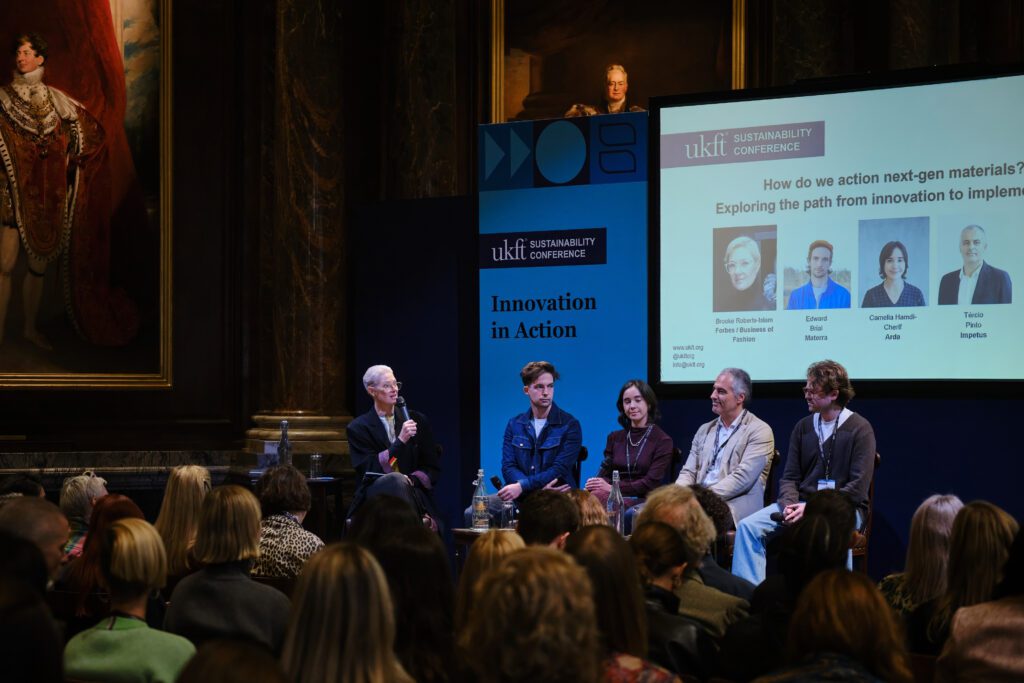
Arda speaking at UKFT Sustainability Conference 2025 Photo credit: Ben Broomfield
MANUFACTURING:
In this section, you will find spotlighted UK-based manufacturing companies aiming to reduce its environmental impact through innovative and digital solutions.
In East London, UKFT member LaundRe is reshaping denim production through its circular finishing hub. Founded by Salli Deighton in 2025, the facility brings together advanced technologies, including laser, ozone and nebulisation, with low-resource washing systems. The aim is to reduce environmental impact and enable brands to produce onshore.
Did you know?
LaundRe presented at UKFT’s Sustainability Conference: Innovation in Action 2025. You can watch the recorded session here.
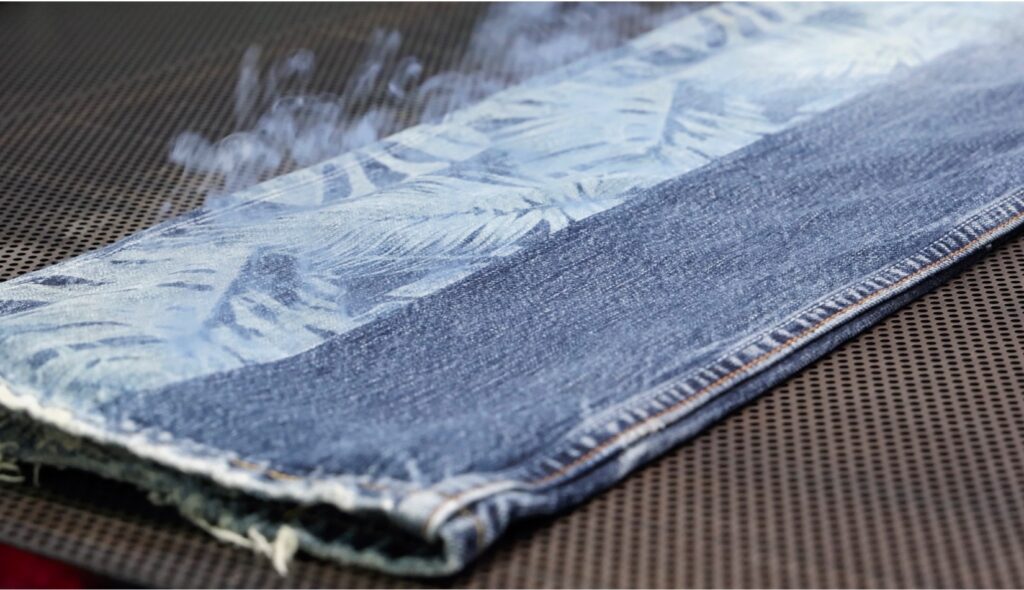
UKFT member: LaundRe
Ethical UK garment manufacturer, and UKFT member, Fashion-Enter is an award-winning social enterprise offering a range of manufacturing services, with a strong commitment to sustainability, innovation and social impact. Alongside its ethical production model, the company repurposes existing stock and provides repair services in collaboration with United Repair Centre, supporting a more circular approach to fashion. It also supports skills development through its Fashion Technology Academy.
COLOURS & DYES:
Dyeing and finishing remains among the most resource-intensive stages of production, but innovation is beginning to positively reshape this landscape.
Start-up SAGES is pioneering phytochemical extraction and biochemical dyeing processes that remove the need for synthetic dyes altogether. By working with natural compounds at a molecular level, it offers an alternative approach to colouration that reduces reliance on petrochemicals.
Similarly, Sparxell has developed a 100% natural, biodegradable colour platform, while Brilliant Dyes is focused on achieving the performance of synthetic dyes using natural inputs.
Did you know?
UKFT’s report ‘ Innovations in Textile and Apparel Dyeing’ report highlights the latest global innovations in dyeing within the textile and dyeing apparel supply chain.
You can read the full report here
EXTENDING PRODUCT LIFE:
UKFT member Beyond Retro has long demonstrated the scale in which rescale can operate, combining retail, e-commerce, wholesale and up cycling to keep millions of garments in circulation. Its model shows how existing products can retain value well beyond their first life.
Did you know?
Beyond Retro offer customers the opportunity to bring pre-loved items to a store and to swap them for store credit.
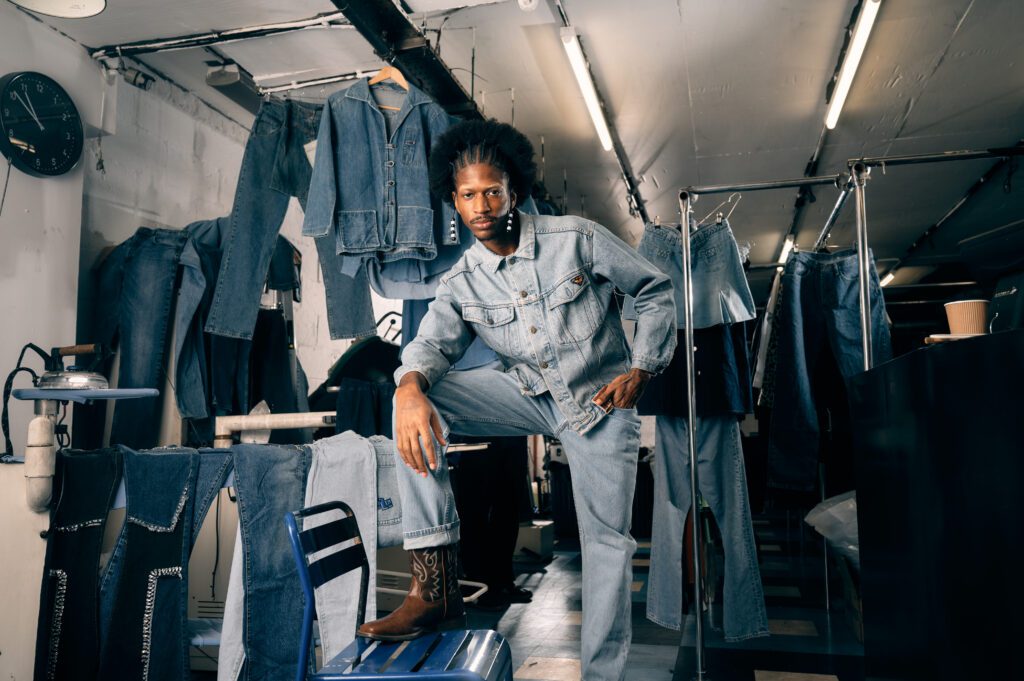
UKFT member: Beyond Retro
Brands are also embedding circularity into their own operations. TOAST’s circle initiative, launched in 2019, brings together repair, resale, up cycling and clothing swaps to extend the lifecycles. This initiative reflects the brand’s commitment to durability, responsible consumption and low-waste design.
Did you know?
UKFT member TOAST donates 10% of revenue from its Reworn garments to its charity partner Traid, helping to fund scholarships for young women in India.
Reskinned is also helping brands take more responsibility for products at end of use. By designing and operating take back programme, it ensures returned items are sorted and directed towards its highest-value next use, other that’s through resale, repurposing and responsible recycling.
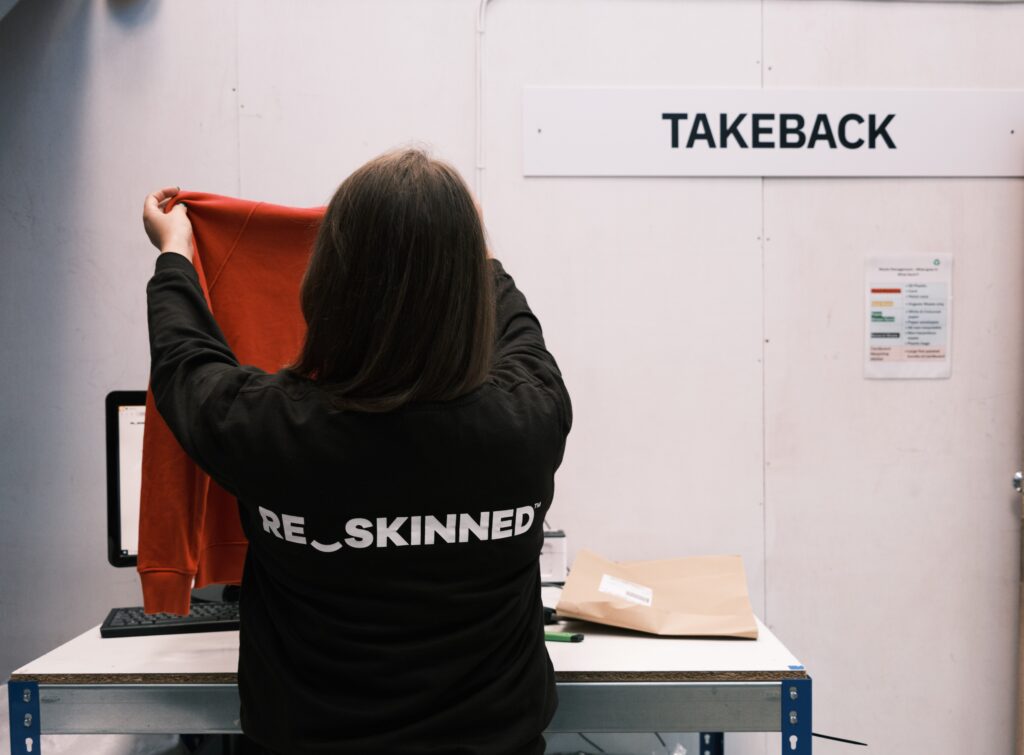
Credit: Reskinned
FUTURE TALENT:
Alongside the above developments, the need for skills, knowledge and educating the next generation is critical.
UKFT Education Partner University of Huddersfield collaborated with UKFT on the Sustainable Practices in the Textile and Fashion Industry course, which reflects a growing demand for accessible, industry relevant training. Delivered online, the course equips professionals with the tools to reduce environmental impact across the supply chain
Did you know?
UKFT reviews and approves fashion and textile training courses that have been designed with industry practice in mind. Approval recognises and promotes high-quality programmes that will equip candidates with the skills required to progress their career and that meet the skills needs of industry, from entry level to higher education and CPD.
Additionally, the Fashion Manufacturing MA, developed with the University of Westminster, addresses industry skills gaps in production, sourcing and supply chain. With a strong focus on sustainability, it is designed to prepare graduates for a rapidly evolving industry landscape.
At the University of Leeds, PACE courses deliver innovative professional education, embedding sustainable practices through its teaching. This approach ensures that sustainability is a fundamental consideration across design, development and production.
Alongside formal education, industry frameworks play a key role in shaping consistent standards. UKFT has been working with the fashion and textiles industry to create and update National Occupational Standards (NOS) relating to sustainability across production and manufacturing job roles, covering the recycle, repair, re-use and reduction of raw materials on the factory floor. Read more here.
Did you know?
A wider network of UKFT Education Partners also contribute to the fashion and textile future talent, delivering a range of sustainability-focused courses and training opportunities across the UK. Read more here
Want to know what more about other innovations, developments and businesses driving real change in the sector ?