
Shaping the future skills for a circular fashion and textiles industry
09/02/2026
The transition to a more sustainable and circular fashion and textiles industry will depend not only on new materials and processes, but on people and skills. Understanding what capabilities are needed, where the gaps sit, and how the sector can respond is now a priority for long-term resilience and responsible growth.
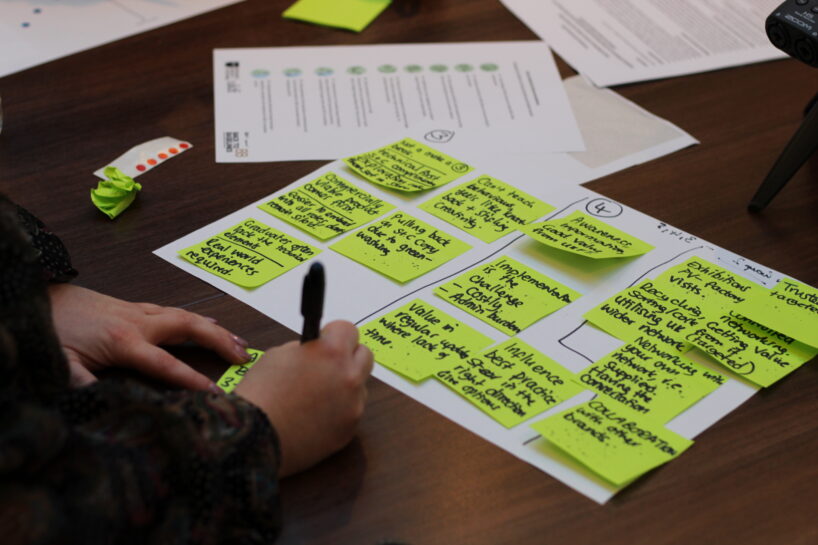
To support this shift, the UK Fashion and Textiles Association (UKFT), in partnership with Nottingham Trent University (NTU), has hosted a series of industry workshops as part of the UKRI NERC-funded Back to Baselines in Circular Fashion and Textiles project. Delivered through both online and in-person sessions, including a workshop at UKFT’s head office last week (4 February 2026), the programme brought together voices from across the value chain to help define the skills landscape for a circular future.
Building a baseline for change
The Back to Baselines project is designed to map the UK fashion and textiles sector and establish a clear reference point for its transition towards sustainability and circularity. A core strand of the project focuses on skills, examining the capabilities currently in place and those that will be required in the years ahead.
The aim is practical and forward-looking: to identify priority skills, highlight current shortages and propose targeted interventions that can support meaningful, scalable change across the industry.
The skills work is led by Professor Amanda Briggs-Goode of NTU alongside Adam Mansell, CEO of UKFT. The workshop phase builds on detailed research already undertaken by the project’s Skills thematic group, including a literature review and interviews and focus groups involving more than 65 stakeholders from both industry and education.
Bringing industry insight into the discussion
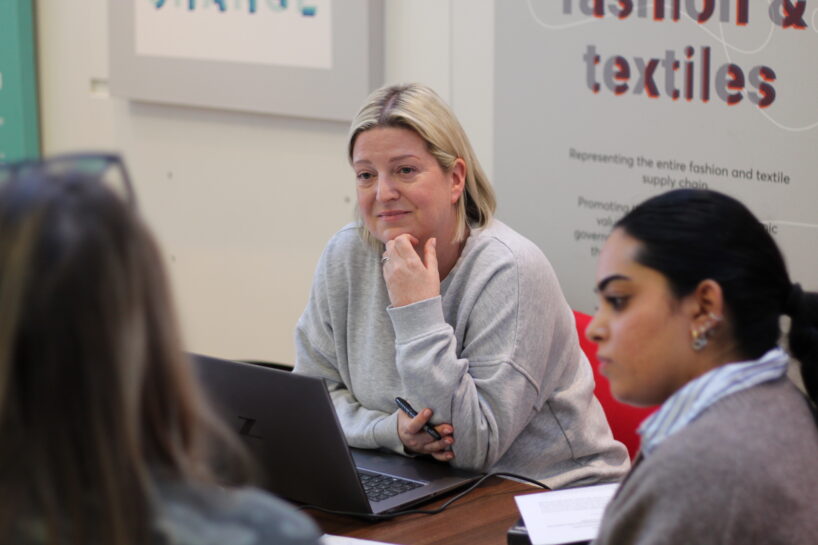
The workshops brought together 25 businesses spanning manufacturing, brands, retail, reuse and recycling. This cross-sector mix ensured that discussions reflected the operational realities of different parts of the fashion and textiles ecosystem.
Participants were invited to review and challenge emerging findings from the research, contributing direct experience and practical examples. The sessions were structured to test assumptions, identify pressure points, and shape recommendations that are workable in real business contexts.
Conversations explored the capabilities needed to move from a largely linear model to one built around sustainability and circularity. Four priority skills areas framed the discussions:
- Technical skills
- Specialist skills
- Behavioural skills
- Cross-functional skills
This structure supported a broad view of skills, covering not only technical knowledge and process expertise, but also collaboration, decision-making and systems thinking.


Shared challenges and collaboration opportunities
One consistent theme across the workshops was the level of shared challenge facing organisations, regardless of their position in the value chain. Participants highlighted the pace of regulatory, commercial and environmental change, and the need for the workforce to adapt accordingly.
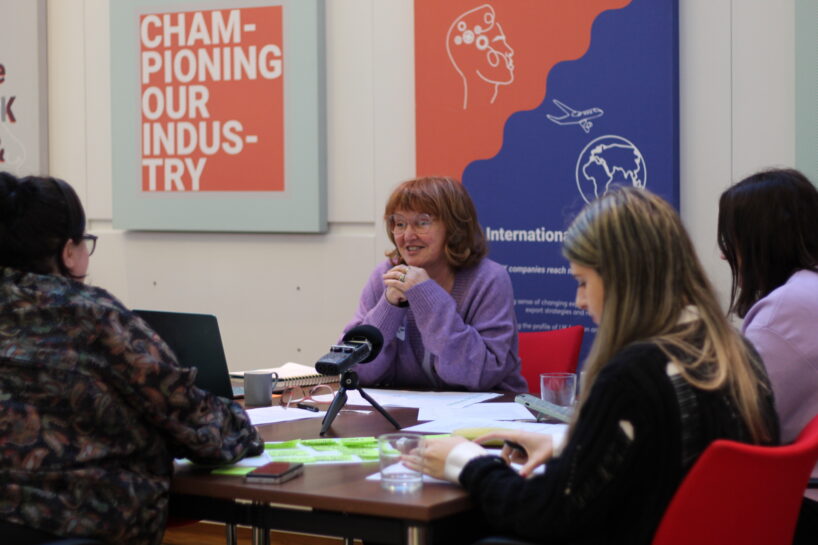
There was also strong recognition that skills development cannot happen in isolation. Collaboration between businesses, educators and industry bodies will be essential to build consistent standards, relevant training pathways and accessible development opportunities.
The open exchange of insight during the sessions helped surface examples of current good practice, alongside common barriers that still need to be addressed.

Skills for the future
The findings from the workshops will directly inform the final project recommendations. Grounding these recommendations in industry input increases their relevance and strengthens their potential impact.
The outputs are intended to guide skills development for both the current workforce and the next generation of professionals entering the sector. The focus is not only on immediate needs, but also on preparing for future circular business models and operating practices.
UKFT will share further updates as the recommendations are finalised, along with opportunities for continued industry engagement. For organisations across fashion and textiles, contributing to and acting on this skills agenda will be a key step in building a more circular and sustainable future.